
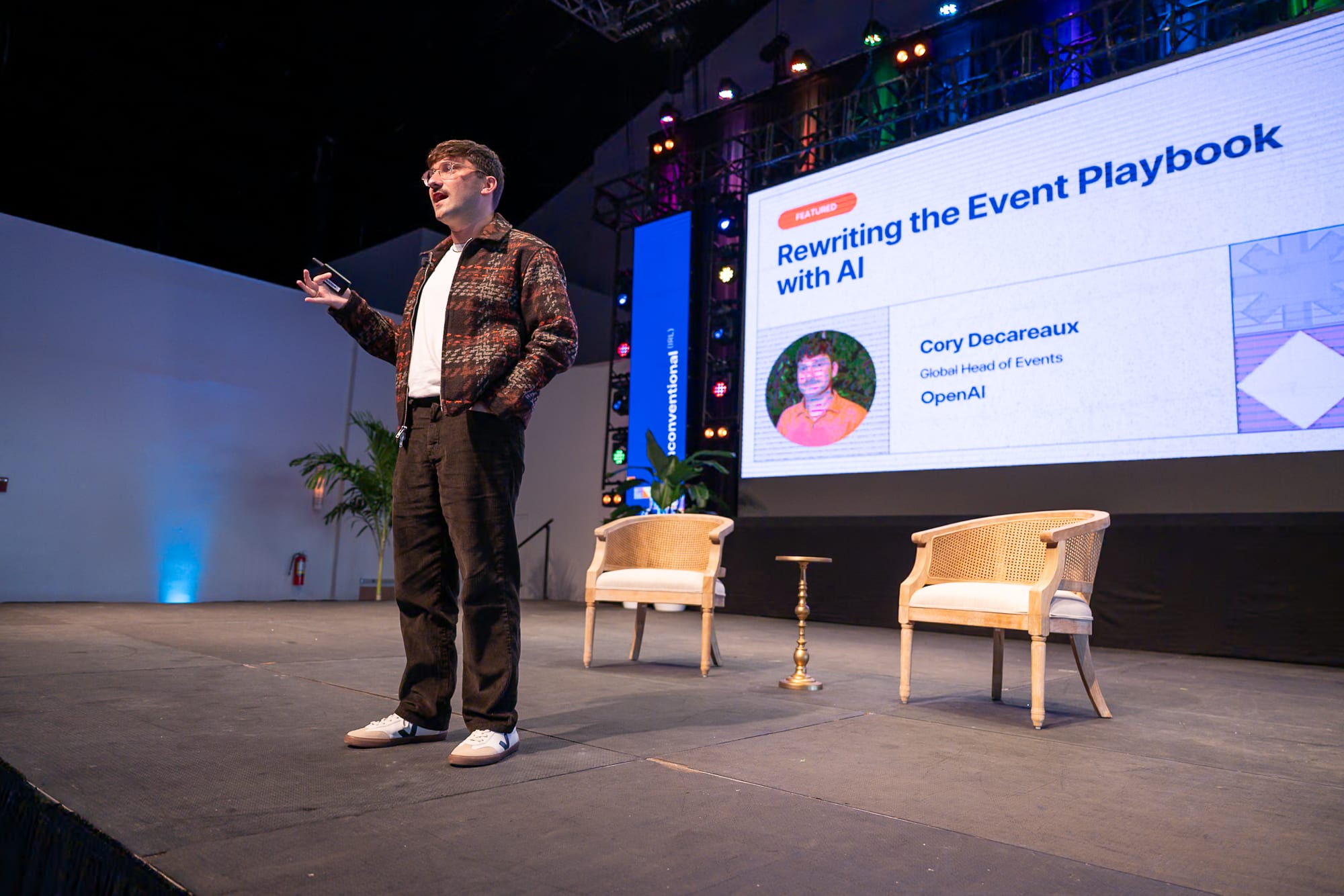

At OpenAI, AI is more than just their product. It’s baked into how they build events, scale teams, and rethink the entire go-to-market playbook.
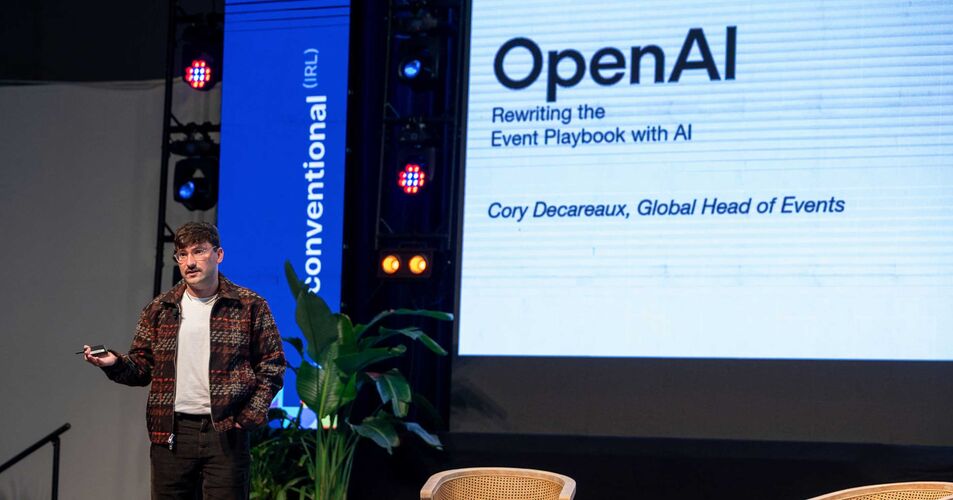
At Unconventional (IRL), Cory Decareaux, Global Head of Events at OpenAI, pulled back the curtain on how a team that went from one person to 20+ in under two years is producing nearly 100 events a year…while the entire world is watching.
No pressure.
Below are a few key takeaways from his session, and how you can apply them as you design, execute, and scale your own event program, with the help of AI.
Watch the full session 👀
1. Events are a core business growth lever
When OpenAI went from relatively unknown to globally dominant almost overnight, they didn’t have time to rely on traditional marketing ramps or slow awareness plays. They needed a way to meet people directly, answer questions in real time, and create understanding around a product that was both exciting and, for many, unfamiliar or even intimidating.
“Events became this very, very strategic channel,” said Cory. “Not just a support function.”
In reality, events became one of the fastest ways to translate something abstract (AI) into something tangible (a real experience with real people). They were actively shaping how people understood and trusted the technology.

“Events didn’t just support the story. They shaped it.”Cory Decareaux, Global Head of Events at OpenAI
What event teams should do
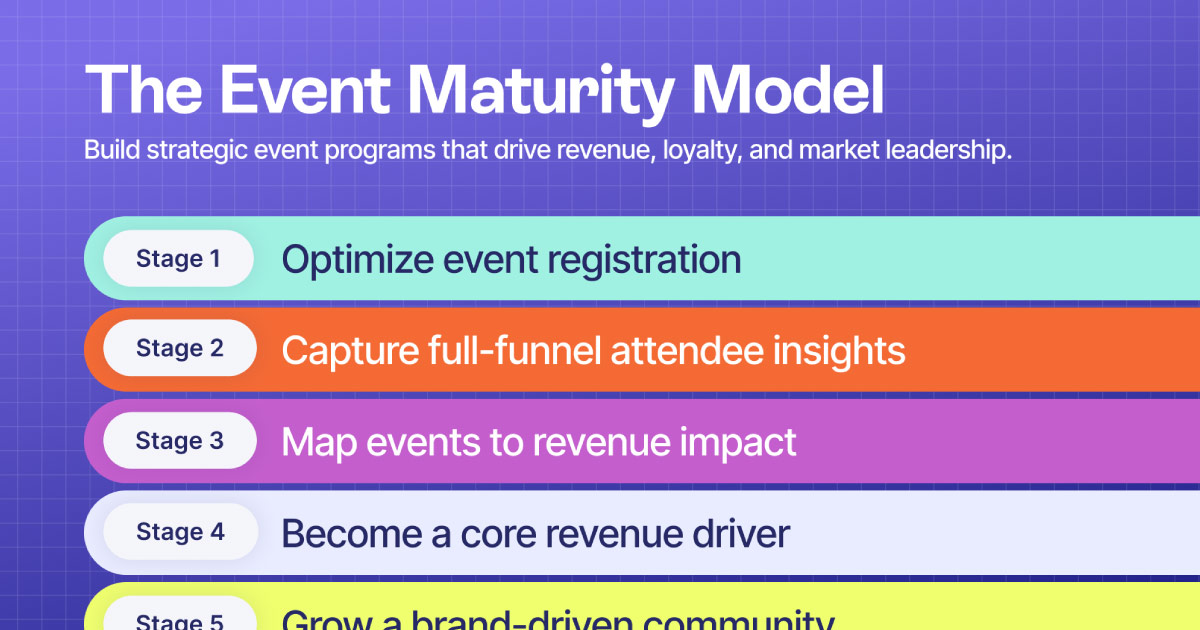
- Reframe your role internally. If your stakeholders see events as execution, you’ll always be downstream. Position them as drivers of trust, adoption, and narrative. Check out the Event Maturity Model for a strategic framework on how to do just that at your organization.
- Tie events to business-critical outcomes. Product understanding. Market expansion. Reputation management. These are boardroom-level priorities; events should ladder directly into them (more on that in stage 3 of the Event Maturity Model).
- Own moments that matter. If your company has something important to say, events should be one of the primary ways it gets said.
GET THE FRAMEWORK
2. Start with “vibes,” really
Forget starting with agenda grids and speaker slots. OpenAI starts with one question.
“We asked, ‘What do we want people to feel?’ and worked backward.”
Because feeling drives perception. And perception drives adoption.
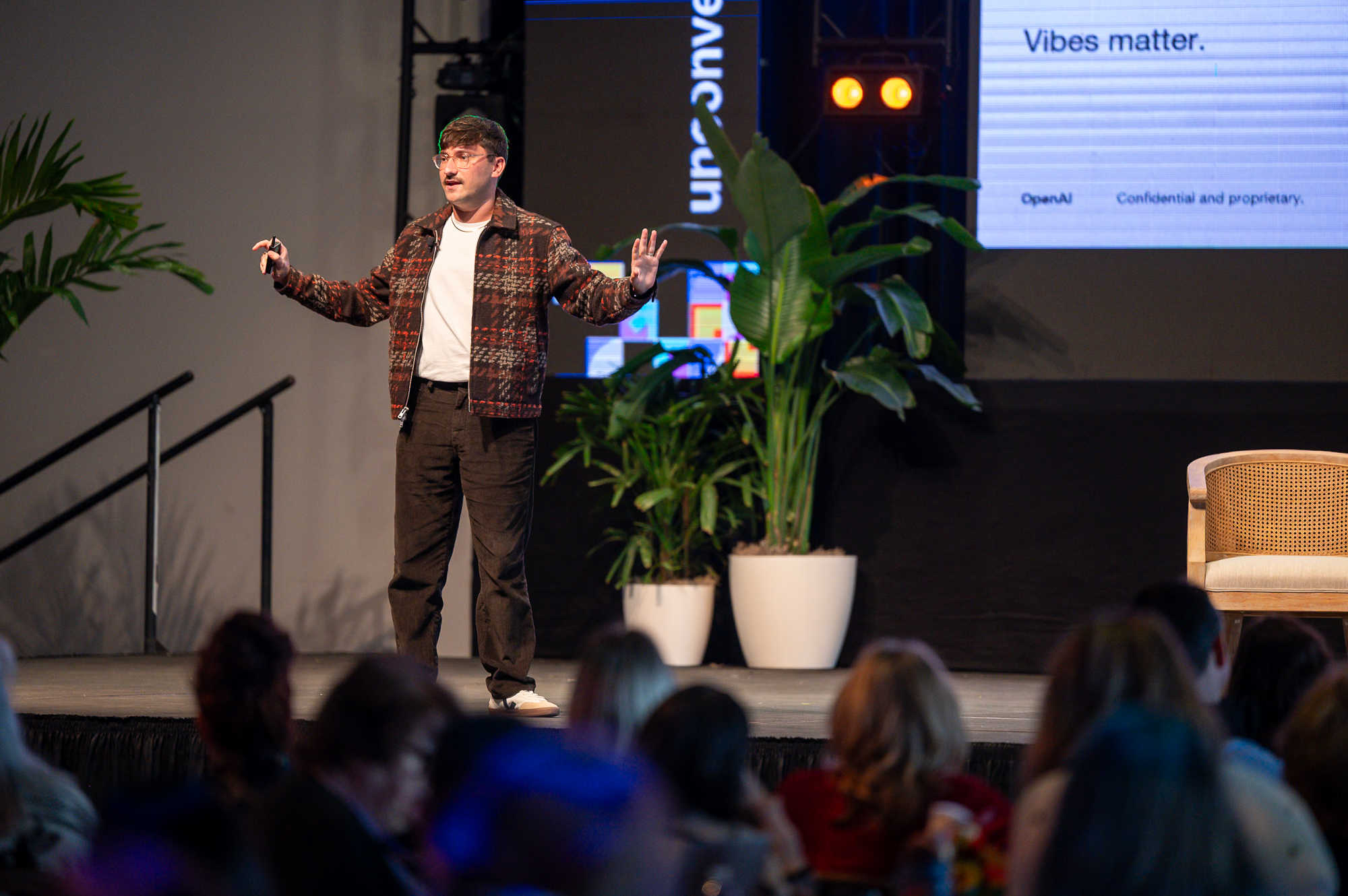
“Vibes matter.”Cory Decareaux, Global Head of Events at OpenAI
What event teams should do
- Define the emotional outcome first. Should attendees feel excited? Safe? Curious? Empowered? That answer should shape everything else.
- Audit your event for emotional consistency. Does your registration experience match your onsite tone? Whether you want people to feel ease, delight, or seen, each of these moments matters.
- Design for memory, not just information. People don’t remember slide decks, they remember how something made them feel. Infuse your desired emotional outcome into everything from your onsite activations, to key networking moments, or interactions with your staff.
3. Authenticity beats production value (especially in tech)
OpenAI could absolutely produce massive, ultra-polished keynotes. They choose not to.
Instead, they lean into real, live, sometimes imperfect experiences, because authenticity builds trust faster than perfection. Especially when the subject matter is new or complex.
That shows up in how they demo their products:
- Live, not pre-recorded
- Real, not staged
- Sometimes imperfect
“Real demos inspire belief and rigor,” says Cory.
When people see something working (or being worked on) in real time, it becomes more believable and more relatable.
What event teams should do
- Stop over-polishing your experience. Perfect can feel staged. The more real you feel, the more credible you become.
- Design for transparency. If something breaks, acknowledge it. Fix it. Move on. That builds more trust than pretending everything is flawless.
- Use familiarity to ground innovation. OpenAI’s phone booth example is genius: they showed cutting-edge tech inside a nostalgic format. Consider how you can creatively make complex things approachable.
4. AI should be your thinking partner, not just a tool
A lot of teams are using AI to move faster, but OpenAI is also using it to think better.
Instead of just automating tasks, Cory’s team uses AI to:
- Challenge assumptions
- Pressure-test ideas
- Expand thinking
- Fill knowledge gaps
It can become an always-on sounding board for your events team, one that can simulate expertise across disciplines and perspectives.
“You have a PhD psychologist… sociologist… event planner… all in your pocket.”Cory Decareaux, Global Head of Events at OpenAI
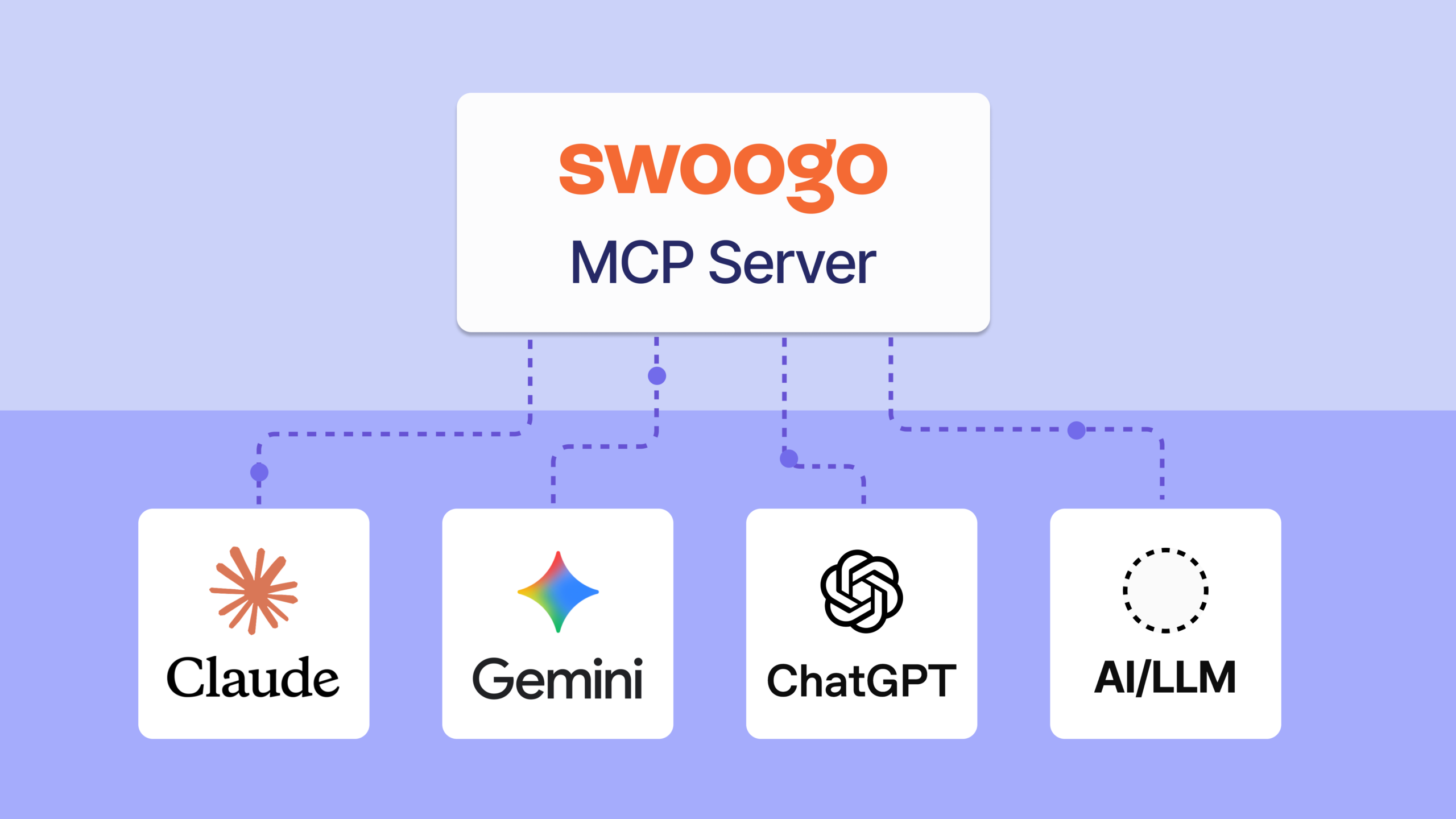
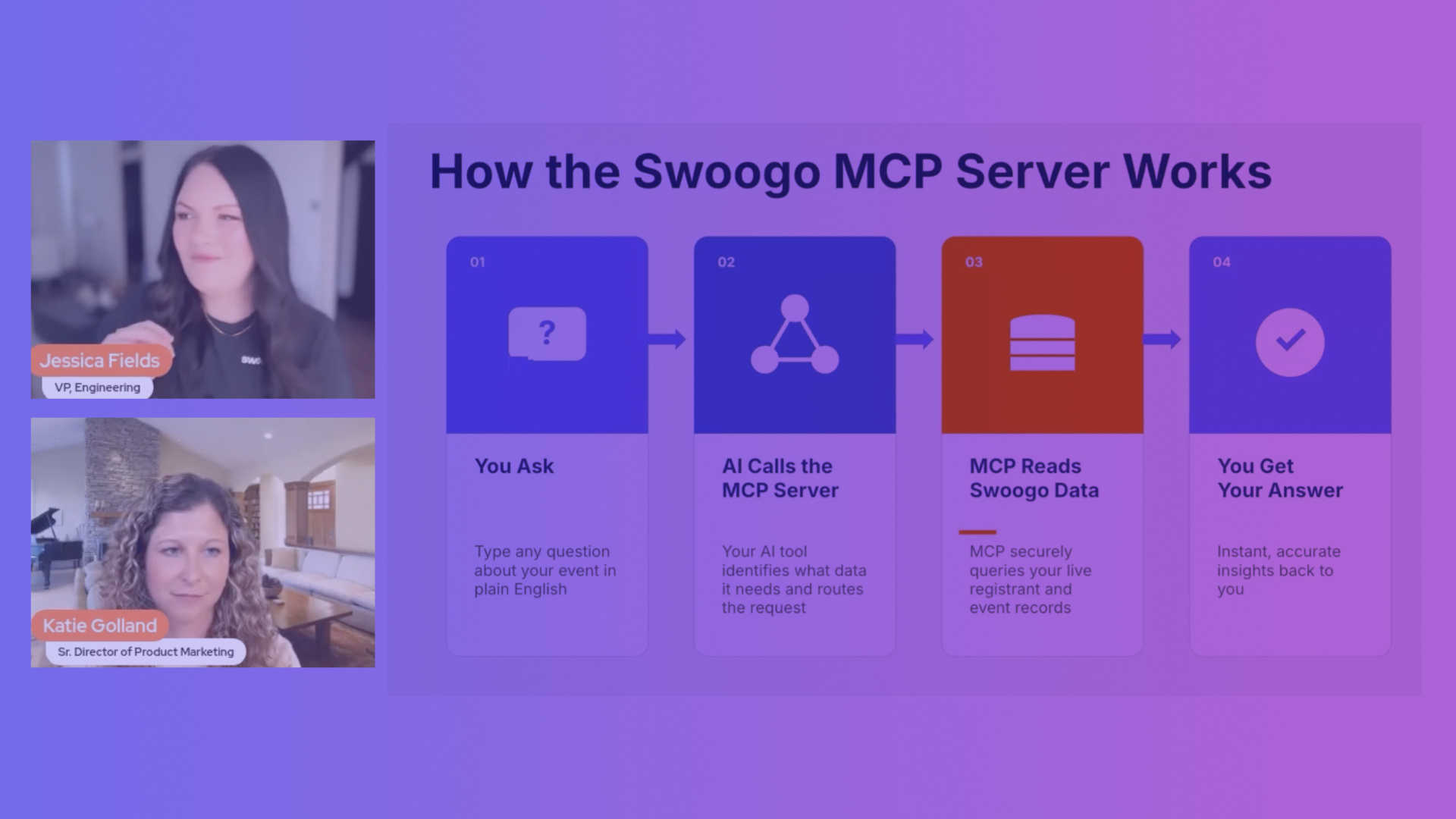
The real unlock is connecting it directly with your actual event data. With Swoogo’s native MCP server, you can link your event data directly into ChatGPT, Claude, or whatever AI tool you’re using already and ask quick questions to get real answers. Instead of brainstorming in a vacuum, you’re working with your real attendee behavior, session performance, and historical trends. That means better prompts, sharper insights, and way more relevant recommendations for your team.
What event teams should do
- Use AI to challenge your thinking. Ask: “What am I missing?” “Where could this fail?” “What’s a better version of this idea?”
- Pressure-test concepts early. Before you pitch internally, run your idea through AI to identify gaps or blind spots.
- Expand your brainstorming process. Use AI to push beyond the obvious and add to your team’s list of ideas.
READ NEXT
5. Speed + quality come from better systems
OpenAI is operating under intense speed: events spin up in days, sometimes hours.
That only works because they’ve rethought how work gets done. As Cory puts it, “Fast but thoughtful is sort of our operating mantra.”
AI helps them:
- Create frameworks instantly
- Build timelines quickly
- Structure information
- Reduce manual work
What event teams should do
- Eliminate “blank page syndrome.” Use AI to generate first drafts of briefs, timelines, agendas. Then refine.
- Automate structure, protect creativity. Let AI handle formatting, organization, and repetitive tasks, so you can spend your brainpower on crafting engaging attendee experiences.
6. Use AI to scale your team without burning them out
OpenAI grew under pressure, with explosive demand, global attention, and constant launches. That kind of environment usually leads to one thing: burnout.
AI became the force multiplier that allowed a relatively small team to operate at a much larger scale, without collapsing under the weight of it. It expanded what each person could handle.
“It acted like our second, third, fourth, and fifth senior events managers,” says Cory.
Tap into AI to remove the things that slows your team down: context-switching, repetitive tasks, manual reviews, constant rework. When those go away, your team gets faster, sharper, and more focused.
What event teams should do
- Turn AI into your invisible team members. Use it for contract reviews, research, planning, and analysis.
- Reduce cognitive overload. Use AI to summarize, track, and align work without constant syncs. Let AI organize chaos so your team can focus on decisions.
7. Data should drive actual insights
While they’re careful about data, OpenAI heavily uses AI for trend analysis and insight generation.
Think:
- Comparing event performance over time
- Identifying sentiment patterns
- Generating tailored summaries for different stakeholders
What event teams should do
- Use AI to spot trends you’d miss manually. Patterns across multiple events, audiences, or time periods. These could easily be prompts you ask using Swoogo’s MCP server.
- Use AI to synthesize qualitative feedback at scale. Open-text survey responses are gold, if you can actually analyze them.
- Ask better questions of your data. Not “what scored highest?” but “why did this resonate…and how do we replicate it?”
- Tailor insights to your audience. Use AI to help translate your raw data into clear insights and business meaning that execs can quickly take away.
WATCH NEXT
8. AI should free you to focus on what actually matters
The more OpenAI uses AI, the more they double down on human connection.
“Our producers now become systems architects… our event managers are more focused on experience.”Cory Decareaux, Global Head of Events at OpenAI
They spend less time:
- Formatting docs
- Chasing updates
- Building spreadsheets
And more time:
- Designing experiences
- Thinking strategically
- Creating moments that matter
What event teams should do
- Shift your focus up the value chain. Move away from task execution and toward experience strategy.
- Use AI to buy back thinking time. That’s where your competitive advantage lives. In fact, get an even greater headstart by stealing some of our own creative event ideas from planning Uncon.
- Lean into what AI can’t replicate. Empathy, nuance, atmosphere, human energy…that’s your lane.
Watch the full session
Want to hear it straight from Cory (and see examples)? Watch the full Uncon session: “How OpenAI is Rewriting the Event Playbook with AI.” If you’re even thinking about AI in your event strategy, this one’s worth your time.
WATCH NOW