


Most post-event sponsorship ROI reports are a masterclass in creative accounting.
“12,000 logo impressions.” “Massive brand visibility.” And the star of the show, a photo of a sponsor logo behind a keynote speaker!
At the end of the day, sponsors still need metrics that speak their language to justify signing the check again.
This post is for both sides of that awkward dance:
- The event team trying to prove event value
- The sponsor trying to decide if they should renew
The good news is that the metrics that matter to both sides are the same. And they’re more straightforward than we tend to make them.
First, agree on what “ROI” actually means
This is the point where things already tend to go off the rails. Yep, way before the event even starts.
If you don’t align on the event goals beforehand, it’s like you’re running the same race but trying to cross two different finish lines. 🤷
Before the contract is signed and the logos are placed, you need to agree on where that finish line actually is, and how long it should take to get there.
Ask the questions that matter:
- What does a successful sponsorship look like to you in six months?
- Are you measuring brand awareness, direct leads, or both?
- What’s your conversion window? (30 days? Six months?)
- What’s the minimum number of qualified leads that would make this worthwhile?
If you know exactly what the sponsor is looking for, you can deliver a report that’s actually useful—not something you need a creative writing degree to present. 😬
That report will be the difference between a sponsor genuinely saying “this was great!” and “we’re going in a different direction next year.”
The metrics that actually matter
Like all things in life, not all metrics are created equal. Some are worth defending in a boardroom. Others should quietly retire.
Metrics worth fighting for
If you’re trying to prove real event sponsorship ROI, these are your Babe Ruths and Reggie Jacksons a.k.a. the heavy hitters.
- Qualified lead volume: Not badge scans. Not “people who walked past the booth.” We’re talking about leads that match the sponsor’s ICP, showed actual interest, and opted in. If a sponsor gets 112 qualified leads, that’s a number they can take home to their revenue team.
- Pipeline generated: Now comes the follow-up question → how many of those leads turned into tangible opportunities? It requires discipline on the sponsor’s side (tagging source in CRM), but when you can say “112 qualified leads led to five sales opportunities—now $450,000 in pipeline,” that’s real impact.
- Session attendance and dwell time: Not just who showed up, but who stayed. If 80% of the room is still there at the end of a sponsor session, that’s a strong signal the content actually held attention.
- Meeting conversions: Booked meetings, completed meetings, and what happened next. “Nine meetings booked, six completed, two moved to proposal stage” is infinitely more valuable than the vague “high booth traffic.”
- Post-event NPS on sponsor perception: Don’t beat around the bush with this. Directly ask attendees, “Would you consider working with [sponsor]?”
There’s a helpful way to group these, borrowed from Shikenso Analytics' sponsorship measurement frameworks:
- Awareness and reach → who saw them
- Acquisition and conversion → who engaged and moved forward
- Long-term value → what happens after the event
- Brand preference → did perception actually shift
Most reports obsess over the first and tend to ignore the other three. That’s how you get a deck full of metrics and still no clear answer to “so, was this worth it?”
Metrics that sound good, but are often empty
- Logo impressions: Unless you have eye-tracking software on every attendee, this number is a guess. Albeit an educated guess, but still a guess.
- Social media mentions: If they’re organic and enthusiastic, great! If it’s mostly pre-scheduled, low-engagement posts and forced hashtags, that’s just noise…not evidence the sponsorship had real impact.
- Total registrant count: “5,000 attendees” means nothing if 4,800 of them aren’t relevant or didn’t opt in.
Remember, a giant list of unqualified contacts the sponsor can’t actually use just ends up being clutter.
The best sponsorship reports are crystal clear: “112 qualified leads, 18 attended your session, nine booked meetings, two are in your pipeline” beats 47 pages of impression data every. single. time.
Set up for measurement before the event
“Now that you know what to measure, good luck!” is exactly what we’re not going to say. 😀
Instead, we’ll talk you through how to set up event reporting properly, so you’re not stuck post-event in a forensic exercise, digging through exports, guessing intent, and trying to reconstruct what happened.
And when does all this measurement work actually happen? Before the event.
Start with registration data, and treat it like an asset
Work with sponsors to define what they actually need:
- Firmographic data (company size, industry, role)
- Buying signals (budget, timeline, interest areas)
- Consent (so they can actually use the data)
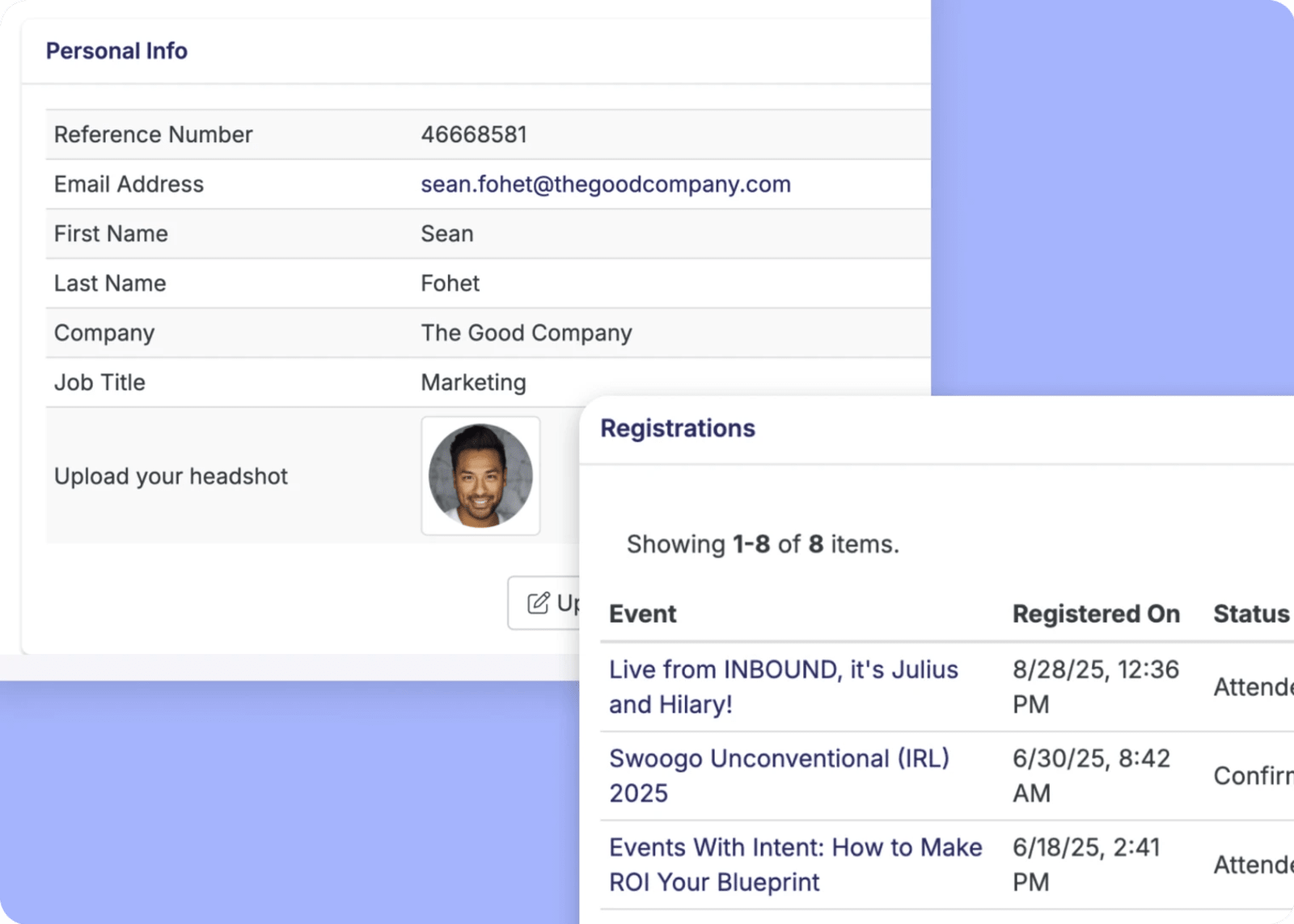
This means building clean, structured registration flows, because the way you collect data at registration directly determines what you’ll be able to prove later.
If you’re not capturing the right fields, qualifying interest, and getting clear opt-in, you won’t be able to answer the questions sponsors actually care about—who was a fit, who engaged, and what turned into pipeline.
With Swoogo, you can get this right from the start with custom fields and segmentation, so by the time the event wraps, you’re not stuck cleaning up a messy export and trying to connect the dots.
Instead, you already have clean, structured data that’s ready to use—not fix.
Make every touchpoint trackable
The golden rule: if it can’t be tracked, it can’t be defended later. So make these things trackable 👇
- QR codes for booth interactions (actual, honest-to-goodness scans, not “traffic”)
- UTM parameters on sponsor links and emails
- Badge scans tied to consent
- Session check-ins that confirm real attendance
Solve the CRM question early
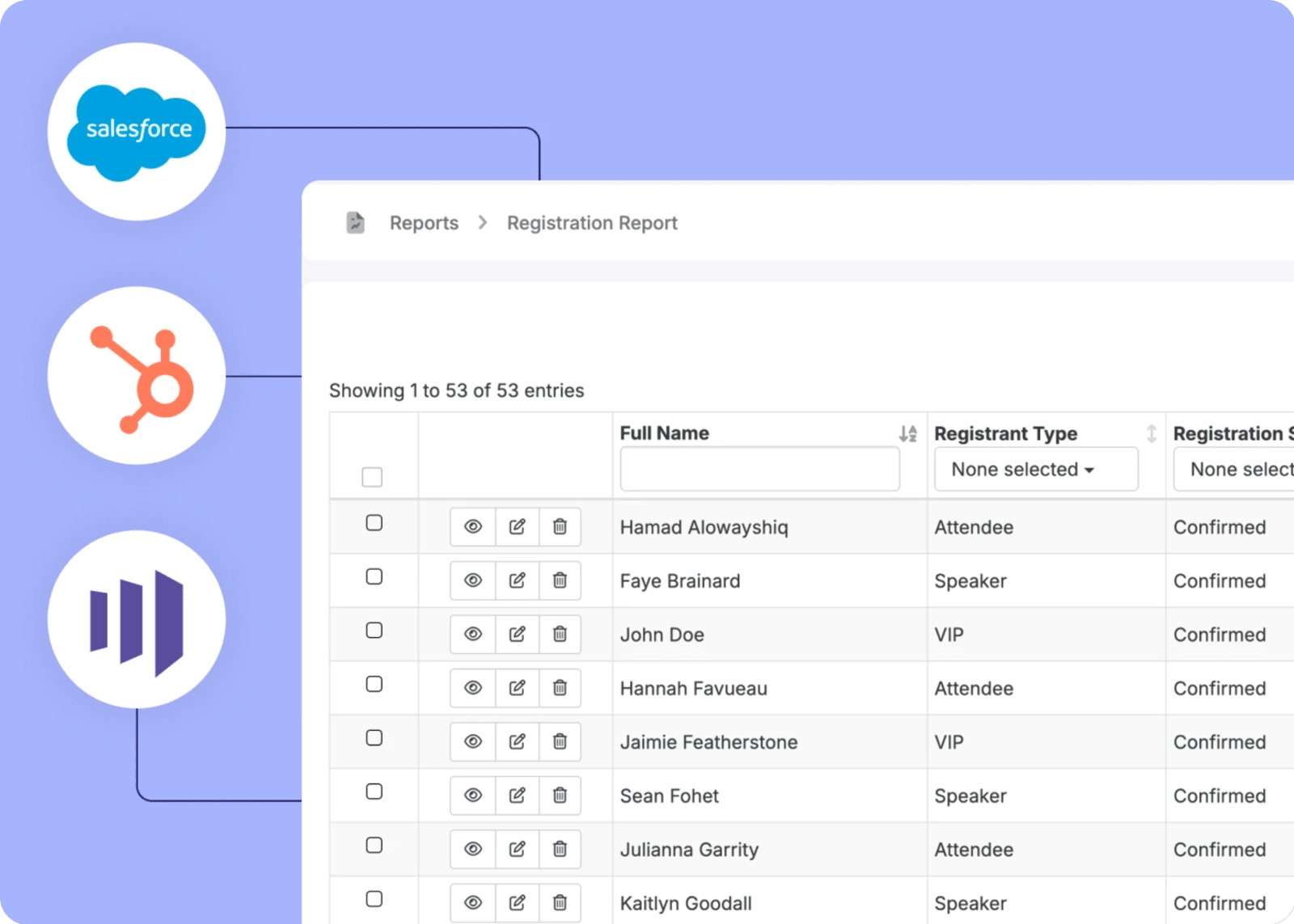
As early as possible, ask sponsors where their leads live. Whether that’s Salesforce, HubSpot, or Marketo, you need to know beforehand so you can integrate from the start.
Choose an event registration software (like Swoogo!) that connects directly to those systems, so data flows into the CRM in real time—not three weeks later via an Excel attachment, when the leads have already gone cold. 👎
The post-event report: What to actually include
Everything comes together here. Here’s a structure that actually works for everyone involved.
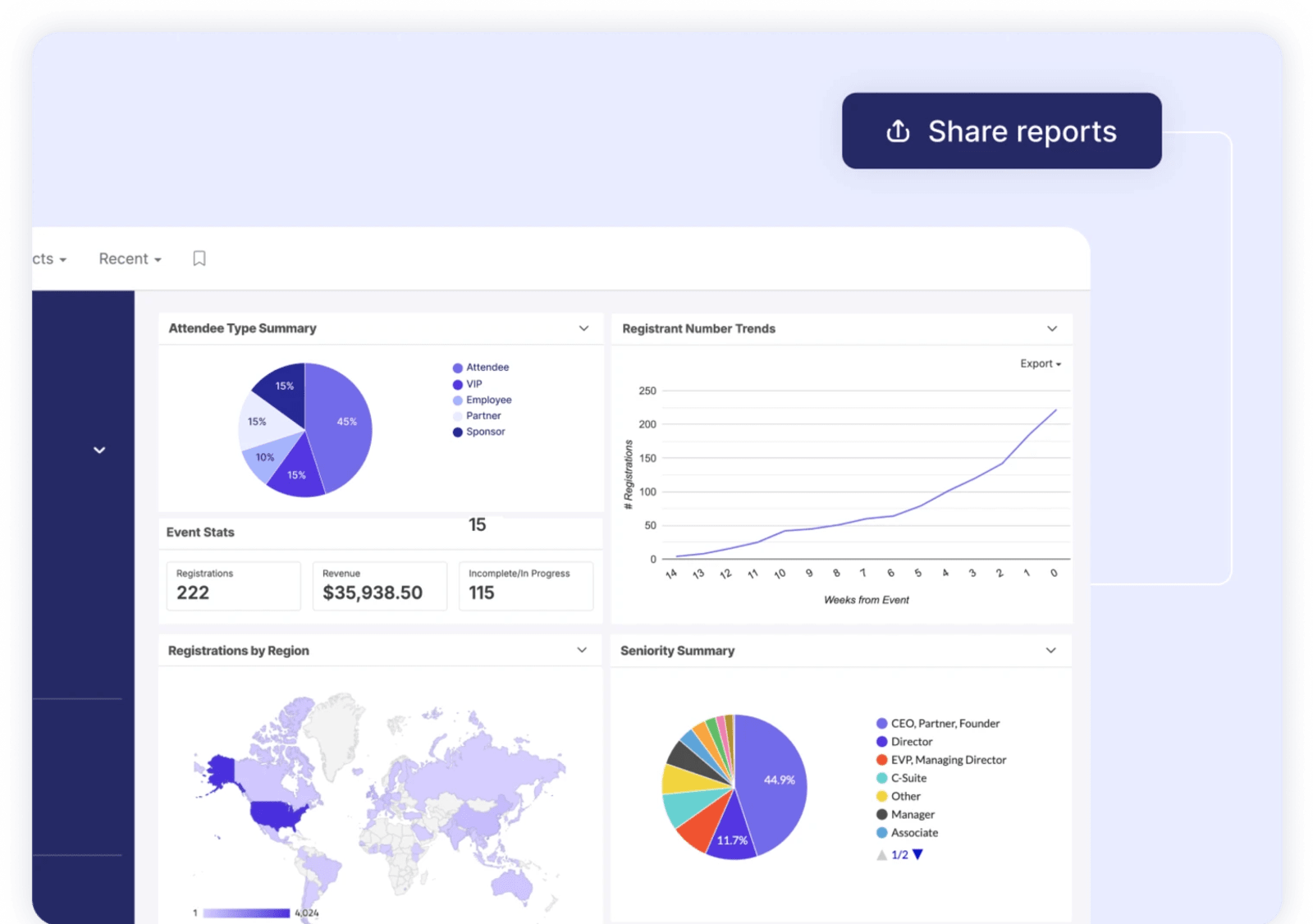
The one-page summary
This is for the VIP who has about 90 seconds (give or take) to read your report.
You’ll need to give them total qualified leads, meetings booked, pipeline generated (if available), and the key takeaway.
Don’t bury the lead under 12 slides of branding, because they won’t get that far.
The metrics breakdown
Every number needs to have context. Think of it as a “yes, and” exercise.
Not just: 112 leads.
But: 112 qualified leads (matched ICP, opted in), 18 attended your session, and 9 booked meetings.
Qualitative highlights
Numbers are concrete proof, but they don’t show everything. This is where the human touch of sponsorship ROI metrics comes out to play.
Here, you can share some of the event magic: notable conversations, moments attendees loved, anecdotes from the booth, and feedback from event-goers.
The honest assessment
A lot of teams skip this part, but it’s often the one sponsors trust the most. Like any set of results, not everything is going to be rainbows and butterflies.
Call out what didn’t work and why. Was the booth placement weak? Was the audience segment off? Was the session timing wrong?
Sponsors aren’t expecting perfection, but they do expect honesty. Cue the sponsors singing a remix 🎵Don’t tell me lies, Don’t tell me sweet little lies 🎶
The forward look
Go beyond the recap and end with a proposal. Immediately answer questions like:
- What would you adjust next time?
- How would you improve results?
- What opportunity is being left on the table if they don’t renew?
It’s your chance to give sponsors a reason to say yes before they’ve even had time to say no.
Building sponsor relationships that renew themselves
THIS is what we’ve been leading up to: sponsors who are excited to work with you year after year.
One-off sponsorships are expensive for everyone involved. Your sponsors want to find the right events to invest in just as much as you want to find the right sponsors for your audience.
What do teams that get consistent sponsor renewals do differently? (Besides follow all the advice from above, of course!)
- They over-communicate during the event: Quick updates. Early signals. “Hey, you’ve already got 40 qualified leads and three meetings booked.”
- They follow up fast: Within 48 hours, not “once we finish pulling the report” three weeks later.
- They treat renewal like strategy, not sales: Instead of “do you want to sponsor again?” it’s “Here’s what worked, here’s what we’d improve, here’s how we’d get you even better results next time.”
Remember, the goal of measuring and presenting event sponsorship ROI isn't to close a sponsorship.
It's to make a sponsor feel like your event is the most reliable, highest-ROI channel in their marketing mix.
Making this work in the real world
At this point, it’s pretty clear: proving event sponsorship ROI isn’t as easy as just building a better report at the end. It’s about setting things up properly from the very start.
That means collecting the right data during registration, tracking real interactions during the event, and making sure everything flows into the systems your sponsors actually use.
That’s exactly what Swoogo is built for—from custom fields and segmentation, to real-time tracking and direct CRM integrations. So when the event ends, you’re not stitching together exports and hoping it makes sense. You already have clean, connected data that shows what actually happened.
The best sponsorship programs are built on honest data, good questions, and a platform that does the heavy lifting.
Curious what that looks like in practice? Let’s chat!
This post was originally published in December 2024 and has since been updated for freshness and accuracy.