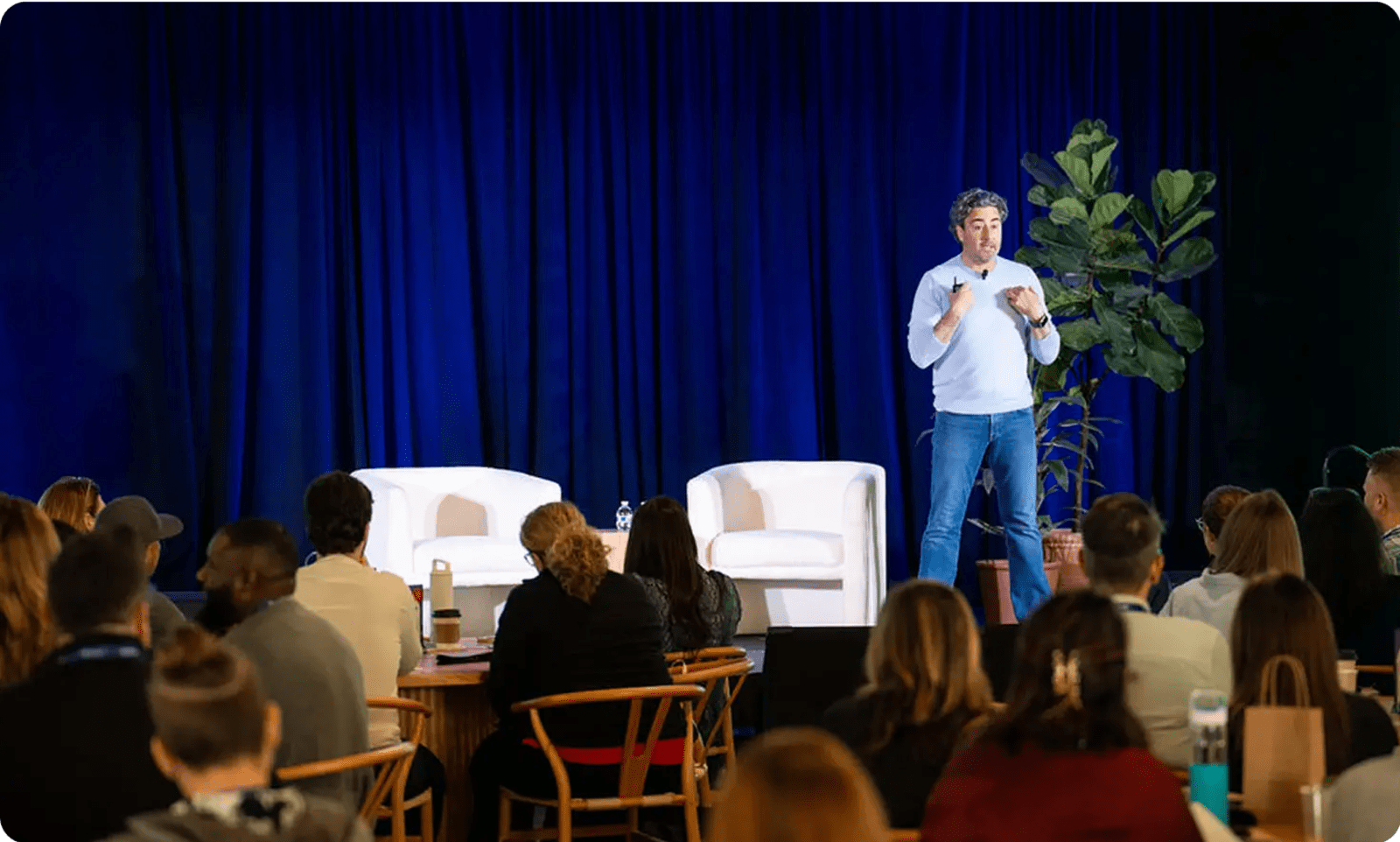
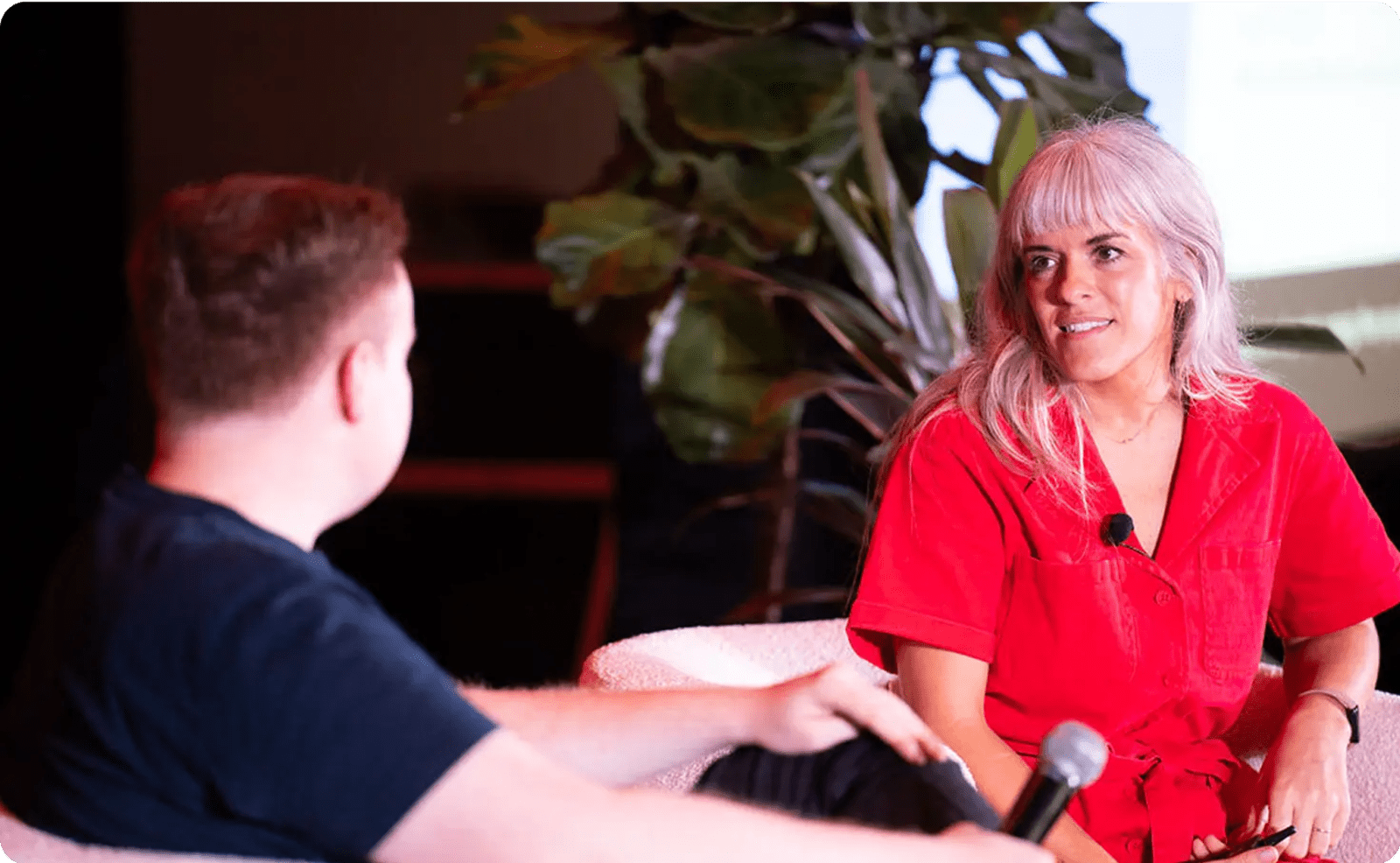
All that planning. All that hype. One massive flagship event … and then it’s over (until next year).
What if instead, that one big moment became the spark for an always-on engagement engine your teams could run together, keeping the momentum alive all year long?
Corporate events + field marketing = better together
If you’re on a corporate events team, not only are you pulling off your organization’s Superbowl, but you’re also on the hook to prove and maximize ROI of your flagship event program. At the same time, you’re looking for ways to extend the value of all your hard work well beyond the event itself, and build demand for next year before this one’s even wrapped.
If you’re in field marketing, your world looks different, but the pressure’s just as intense. You’re likely trying to connect your smaller, territory-based events back to a corporate marketing strategy, while also needing repeatable, corporate-approved content so you’re not spinning up something new every single time. You’re trying to keep audiences engaged year-round and ensure your regional efforts help fill the flagship event every year.
No matter which side you’re on, you don’t have to tackle this alone. By working together, corporate events and field marketing teams (and anyone else in the mix) can turn your flagship event into a year-long engagement engine.
One that solves for every single pain point above.
Imagine
Your flagship event launches a year’s worth of roadshows, webinars, and integrated revenue campaigns that keep the momentum (and the ROI) alive.
You have plug-and-play content that’s on brand, on message, and easy to localize for any territory.
Every touchpoint feeds back into demand for next year’s flagship event, so your audience shows up bigger and more excited each time.
Attendees become advocates, not just participants, fueling year-round community and improving customer lifetime value.
This guide will show you exactly how to make it happen.
We’ll share 10 activation ideas you can steal to keep your audience engaged all year long, plus practical tips for collaborating across teams to turn your flagship event into a true year-round growth engine.
10 Ideas to Turn Your Flagship Event Into a Year-Round Engagement Engine
Use these event plays and ideas to transform your flagship event into a year-long engagement program that fuels pipeline, community, and next year’s attendance goals.
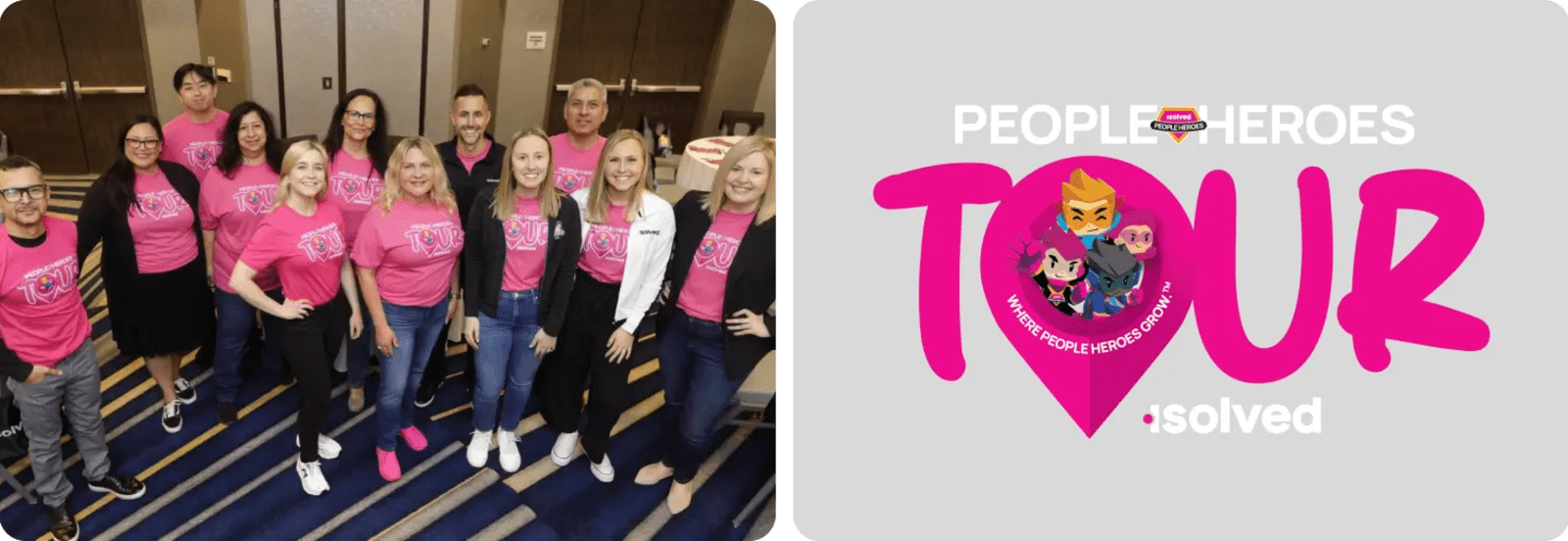
Regional Roadshows: Your Flagship Event on Tour
Bring the best of your flagship event to your key regions with half-day or full-day roadshows. Start with the same theme or opening keynote to keep the brand story consistent, then localize with region-specific breakout sessions, customer panels, or roundtables that address the priorities in that territory.
How to do it
Corporate events teams can package everything into a roadshow content kit: pre-built decks, talk tracks, microsites, leave-behind content (like a one-pager or guide to take as they leave), and even suggested venues and region-specific swag budgets.
This way, field marketers can run faster and focus on execution — booking the space, inviting attendees, pulling off the actual event — while the corporate events team maintains control over the brand, the message, and the event experience.
When it comes to follow-up, create a “build once, use many times” approach for sales enablement around what to do with the leads from these regional events. Provide guidance on a consistent follow-up process with assets deployed to sellers, rather than one off, inconsistent event follow-up strategies that are spun up regionally.
Why it works
Field marketers move faster with ready-to-go assets
Attendees get a consistent, high-quality experience
Corporate events maintain strategic alignment across touchpoints while reaching additional audiences with valuable messaging and content
Global Pop-Ups in Emerging Markets
You likely are hosting your flagship event in a location and time zone that make sense for the largest swath of your customer and prospect audiences most likely to attend. Consider a one-day version of your flagship event in key international markets to extend your reach without needing to commit to the cost of another full-scale production.
How to do it
Run a smaller, localized version of your flagship event with translated content, or, depending on your regional marketing coverage, even just a “greatest hits” webinar in the local language.
Consider proactively which translations you’ll need for which presentations; for instance, if you’re running your big event in Vegas but know that France is a key growth market, plan to translate to French in your workflow.
Why it works
Captures audiences who are unlikely to travel to your flagship event
Maximizes the potential reach of your existing content and leverages corporate messaging globally
Builds brand awareness in strategic growth regions without overspending
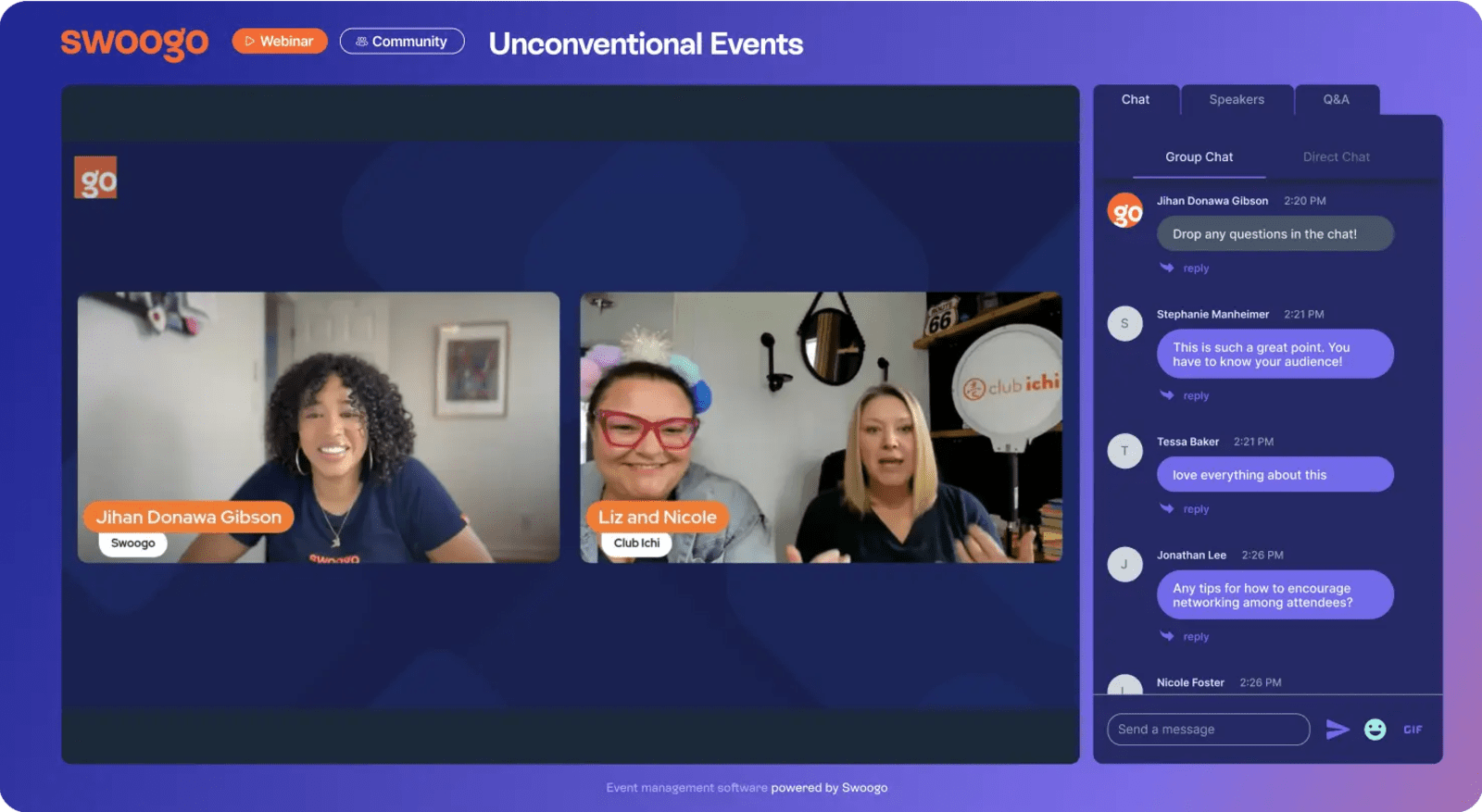
Year-Round Webinar Series on Hot Topics
Your session data and post-event surveys are a treasure trove. Find out what sessions resonated most at your flagship event, and then spin those into a monthly or quarterly webinar series.
Not only will this help you reach audiences who might not travel to your flagship event, but it’s also a great way to pull your content further up the funnel for prospects who don't know enough about your brand to commit to attending an in-person event with you just yet.
How to do it
Invite the original speakers back, or co-host with partners or customers for added reach or a new perspective. Continuing the conversation in this way can also surface more ideas to reformat into different content formats.
Why it works
Extends the life of your most popular content, especially with earlier-stage buyers
Keeps your brand front and center between major events
Builds a recurring audience you can nurture into attending your next flagship event
Lunch-and-Learn Workshops
Turn your flagship event’s top workshops into intimate lunch-and-learn sessions on the road. Invite customers, prospects, and even partners to join for a workshop plus networking time.
💡Pro Tip
Turn this into a partner play
Tie this into sponsorship packages for your flagship event. If an exhibitor sponsors your flagship event, they get first dibs on lunch-and-learn sponsorships too. This creates year-long partner value and makes it easier to fund the series.
Why it works
Creates high-touch experiences for prospects and customers, in their own cities
Gives partners more opportunities to engage beyond the flagship event
Leverages workshop content you already created
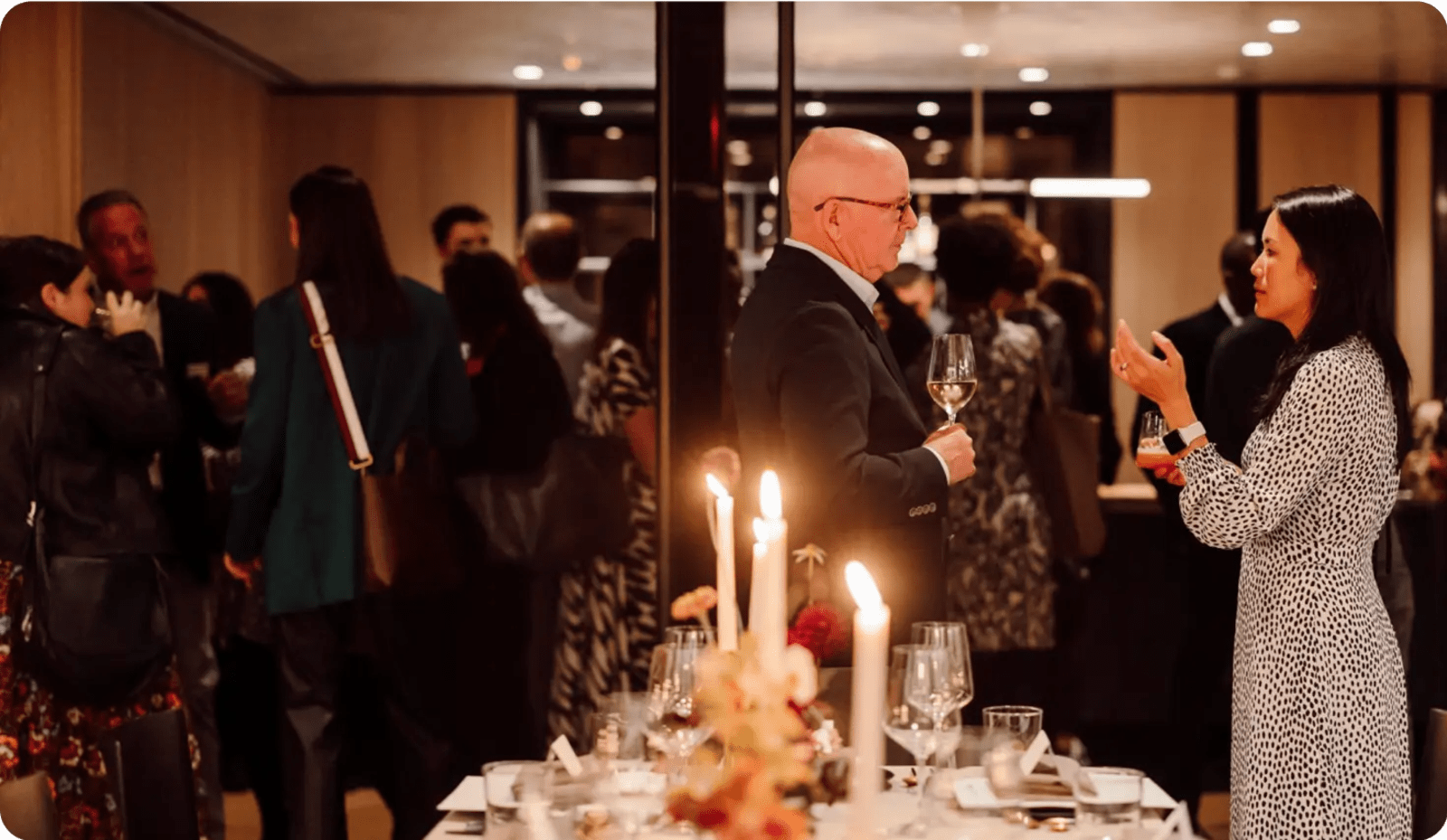
Executive Supper Club Series
It’s difficult to get senior executives to attend big conferences. They’re busy, they’re picky, and travel is a hurdle. Bring the conversation to them with an executive dinner tour in top cities.
How to do it
Your executive team is busy too, but they’re likely your ideal hosts for this audience. Commit your own leadership team to a sprint: hosting 4 to 7 dinners across key markets in a single week or month. For instance, you might try to hit key cities in the eastern seaboard within a week or two. Keep it VIP-only, small-group, and in upscale venues to maximize quality interactions.
You might choose this to be a content-free, networking-only dinner to simply bring industry peers together. Or, you might bring some light content built around executive-level insights.
💡Pro Tip
Help executives engage their own teams via post-event follow-up
Despite being your main decision-makers and budget-owners, this audience of executives might not be as “in the weeds” with your product or service as their teams are. Help these executives connect their own team members with you via your follow-up content after the supper club.
Perhaps this is a free pass to your next flagship event that they can pass to someone on their team, or an offer for a content kit or virtual workshop to help their team get more value from your product or service.
Why it works
Gives senior executives a lower barrier of entry to engage with your brand; it’s an easier yes to dedicate an evening out in their home city with you, rather than flights and a few days away to attend your flagship event
Builds thought leadership and trust with decision-makers
Lumping the travel into one tour keeps it efficient for your execs
Account-Specific Workshops for Key Accounts
Many prospects and customers typically send just one or two people to your flagship event. But what if you brought the event to them? Offer to run a workshop or session inside their organization for broader exposure, and invite many more teams and individuals than you would’ve been able to meet otherwise. This becomes a strategic event-based ABM play.
How to do it
Identify top accounts and offer a customized version of your most popular content from your flagship event, either virtually or in person. The number of accounts you take on might vary widely based on your team’s bandwidth to execute.
When working on one account, invite multiple teams from that account to attend your workshop. This allows you to reach way more people within that account, than you would with your flagship event.
If you have an ABM team within your organization, this is a great way to connect the dots between corporate events, field marketing, and ABM. You could also consider packaging up content as an “event-in-a-box” solution for account teams to execute these themselves in an on-demand way, owned by a mix of sellers, account managers, customer success managers, or field marketers.
Why it works
Exponentially expands your reach within strategic accounts
Creates stickier relationships by delivering tailored value though a VIP experience with custom content
Opens doors to new, untapped stakeholders who may not travel to your event
Education and Community Funnels
Follow Atlassian’s lead: use your flagship event to funnel attendees into year-round community engagement, much of which is tied to learning.
“We also see our events as a way to establish and nurture community. We use our events to push to the next step that continues to add value for the customer: webinars, group forums, engaging in Atlassian Community, and Atlassian University.”
Josh Shepherd, Head of Event Technology at Atlassian
How to do it
Invite your flagship event attendees to engage with your brand’s training modules, certifications, or community forums.
Why it works
Turns a one-time attendee into a long-term learner
Builds brand loyalty through ongoing value
Strengthens your customer community between events
Your keynote speaker or influencer partner doesn’t have to be a one-and-done investment. Work with them to host or co-host smaller activations at other points in the year. Get creative and brainstorm other ways you can partner with them as you build these relationships.
How to do it
Consider negotiating this upfront as part of their contract: a keynote plus one or two follow-on engagements, like a fireside chat or regional happy hour.
In fact, because many keynote speakers travel a ton, you could make it easier for them to say yes by suggesting an event in their home city. They can pick the place, and you’ll pick up the tab.
Why it works
Extends the star power of your flagship event
Gives you more touch-points with the speaker’s own network
Gives attendees more reasons to engage with your brand throughout the year
Customer Storytelling Series
Your flagship event is likely a goldmine of customer success stories: panels, fireside chats, breakout sessions where customers share how they use your product or service. Don’t let those stories collect dust.
How to do it
Take the best customer-led sessions and repurpose them into a quarterly storytelling series. You could turn panel discussions into small regional meetups where those same customers speak to local audiences, repackage breakout sessions as virtual “customer spotlight” webinars, or invite those customers to join roundtables with prospects in similar industries or roles.
Why it works
Gives you real voices (not just your brand) telling the story all year long
Builds advocacy by spotlighting customers as thought leaders
Creates a constant stream of authentic, peer-driven content without reinventing the wheel
Roadshow-to-Flagship Loyalty Perks
Close the loop between your regional roadshows and your flagship event by incentivizing roadshow attendees to register early for your next big event.
How to do it
At your roadshow event or other field marketing activations, offer attendees a special discount off your next flagship event. If they do register, prepare a personalized gift as a way to make them feel seen and valued. There are a couple ways to execute this:
Upon arrival at your flagship event, the person who hosted the roadshow greets them with a gift bag and personal welcome (“Hey, it was so great seeing you in Boston! Here’s a treat for you, we’re so excited you’re here with us today.”)
Rather than waiting for the flagship event, you could do a direct-mail campaign and send registrants a gift as soon as they sign up, with a personalized note from the roadshow host that helps them feel the extra love (“We saw that you signed up for our user conference! We’re so excited, here’s a little something for you.”)
💡Pro Tip
Get aligned with sales, marketing, and C-level executives to implement conditional logic and ask specific questions based on attendee information. This will help you provide a personalized registration experience for different attendee types; you can also use this data to inform unique experiences on the day of the event.
Why it works
Incentivizes early flagship event registrations
Helps prospects and customers feel seen and appreciated; you’re recognizing this isn’t their first time engaging with you, and you’re letting them know you appreciate the time they’re investing in attending multiple events of yours
Regional events and roadshows feed directly into your big annual moment
Collaboration Tips to Get Teams on the Same Page
Turning your flagship event into a year-round engagement engine only works if everyone’s rowing in the same direction internally: corporate events, field marketing, campaigns teams, sales, and even marketing ops and tech teams. Otherwise, you end up with silos, mixed messages, and random acts of marketing.
Use these tips to make sure your teams aren’t just running events here, campaigns there, and field marketing activations over there…but actually designing programs that fit together.
Tip 01
Give corporate events a seat at regional QBRs
In large organizations, field marketers are often the “face” of the marketing team to their sellers. Consider giving your corporate events leader the spotlight during QBR season to help connect the dots between regional field programs and flagship event priorities.
With a standing slot on regional QBR agendas, your corporate events leader can:
Share flagship event priorities with field teams
Hear what’s working in the field
Connect the dots between big-picture goals and local execution
This simple step turns your flagship event into the heartbeat of your entire event strategy, not just a one-off showpiece, and helps emphasize the marketing-wide commitment to your flagship event program.
Tip 02
Host a live Q&A with sales
In that same vein, instead of relying on busy field marketing teams to relay flagship event details to sales, host a live Q&A session where sales reps and leaders can ask questions directly to corporate events. It’s faster, clearer, and ensures everyone hears the same message at the same time.
Be sure to record it so anyone who couldn’t attend live can still get the inside scoop.
Tip 03
Incentivize sales reps to drive attendance
Your sales team is your secret weapon for boosting attendance.
Make it worth their while:
Run contests or leaderboards for event registrations from their territories
Give special shoutouts in team meetings or internal newsletters
Offer prizes or spiffs, or allow certain reps to attend your event if they drive a certain number of registrations so they can engage with their customers and prospects
When sales sees event attendance as part of their success metrics, they’ll help fill the room.
Tip 04
Create an event portfolio on one page
Once or twice a year, do the internal-planning exercise of putting your entire revenue-driving event portfolio on a single page. Yes, the whole thing: flagship events, regional roadshows, webinars, partner activations.
This forces everyone who owns revenue-generating events to see how the pieces fit together cross-functionally. You can still have team-specific readouts and detailed plans, but the one-pager becomes the internal cheat sheet that shows how every event ladders up to bigger company goals, and identifies gaps and opportunities for better alignment.
Tip 05
Run a tech + data health check
Field marketing might be using Marketo. Corporate events might be on a separate event platform. Webinars might live in yet another tool. If your systems don’t talk to each other, you’re flying blind and missing huge opportunities to simplify operations and create a better prospect and customer experience.
Schedule a cross-team event tech health check:
Map out every tool touching your event program
Identify gaps or overlaps
Make sure data is shared so reporting and ROI tracking actually work
This is also where that “event portfolio on a page” comes in handy. You can see the big picture and spot where tech or data silos might be slowing you down.
Make the Magic Last
Your flagship event shouldn’t fade when the lights go out. With the right activations and tight collaboration across corporate events, field marketing, and campaigns teams, you can turn that one week of energy into 52 weeks of engagement, pipeline, and community that extend the value of that event to new audiences, while seeding interest in attending your next big show.
Steal these ideas, make them yours, and start building a year-round engine that keeps your brand buzzing long after the big show ends.